


When you’ve just discovered infidelity, your world turns upside down. You’re trying to breathe through the shock while facing an overwhelming question:
“Should I even try to heal this relationship if I’m not sure I want to stay after infidelity?”
It’s one of the most common and emotionally complex questions we hear from hurt partners. In fact, it’s often the reason couples reach out to us in the first place.
This post unpacks that very question with deep compassion and clarity. Whether you’re standing in uncertainty, feeling pressured to decide, or simply trying to make sense of what healing might even look like, this is for you.
Is It Normal to Feel Uncertain about staying After Infidelity?
Yes. In fact, it would be unusual if you didn’t.
Infidelity creates a profound rupture in a relationship. One moment, life feels stable. Next, you’re questioning everything: your partner, your past, your future, and even your own instincts.
Many hurt partners tell us they feel like they’re living two emotional truths at the same time:
- “I can’t believe this person hurt me like this.”
- “I still love them and miss the life we had.”This emotional duality is not a sign of weakness; it’s a sign of humanity.
Why That Emotional Seesaw Makes Sense
Let’s say you’ve spent years building a life with your partner—shared memories, family milestones, and plans for the future. Then infidelity enters the picture, and suddenly the person you trusted most feels like a stranger.
You might feel the urge to run far away. And simultaneously, you might still want to reach for them. That back-and-forth is not something to be ashamed of. It’s normal. And it doesn’t mean you’re doing it wrong it means you’re in it.
Do I Have to Know If I Want to Stay After Infidelity Before Starting the Healing Process?
No, you don’t.
At Relationship Experts, we don’t require hurt partners to be 100% certain they want to stay to begin the healing journey. In fact, some of the most transformational healing we’ve seen happened after the decision to stay was made, not before.
Why? Because healing itself often brings clarity.
Healing After Infidelity Can Be the Path to an Answer Not Just the Outcome
We’ve seen countless couples move from “I’m not sure” to “I want to fight for this” during the process of rebuilding trust and emotional safety. That shift doesn’t come from overthinking or pressuring a decision; it comes from showing up, even with uncertainty, and being willing to explore.
And just as importantly, we’ve also seen people go through healing and realize that they want to leave, but this time, with peace, closure, and dignity.
Both outcomes are valid. What matters is how you get there.

Why Do Hurt Partners Feel Pressured to Decide if you want to stay after infidelity Right Away?
This is such an important question, and the pressure is real.
We live in a culture that often promotes black and white thinking: “Once a cheater, always a cheater.” “If you stay after infidelity, you’re weak.” “You should know what you want.”
But when you’re the one actually living it, everything feels far more complex.
The Weight of Societal Judgment and Self-Talk
It’s not uncommon for a hurt partner to hear opinions like:
- “I would never stay if that happened to me.”
- “A strong person would have left already.”
- “You’re setting yourself up to be hurt again.”
Or even more personal pressures:
- “I used to think I’d never tolerate cheating.”
- “My family expects me to leave.”
- “I don’t want to look like a fool.”
These messages can be crushing. They create a false urgency that you must decide immediately, or risk losing self respect. But the truth is, most hurt partners simply aren’t ready to make a decision that fast, and they shouldn’t have to.
What Gives Hurt Partners the Clarity They’re Searching For?
Clarity rarely comes from racing toward a decision. It often comes from slowing down and starting the healing work without pressure.
We tell our clients:
You don’t need to know if you want to stay after infidelity, you just need to know you want to heal.
That healing can take many forms: individual therapy, couples coaching, or a structured infidelity recovery program like ours.
Real Life Example: Jenna and Jeff
Jenna came to us devastated after discovering her husband Jeff’s long-term affair. She didn’t know if she could ever trust him again, and she didn’t know if she wanted to.
The question “Should I stay after betrayal or go?” consumed her thoughts, keeping her up at night. It was paralyzing.
When we told her she didn’t need to decide right now that she could start healing while still holding that question she exhaled. That permission alone lifted a huge burden.
As the healing process began, she started to see Jeff show up differently. He expressed genuine remorse, not just words, but in actions. Over time, Jenna began to feel safe again. And eventually, she did make a decision one that felt grounded and right for her. But it only came after she allowed herself to be in the uncertainty and began the work.

What Are the Signs That a Relationship Has the Potential to Heal?
After working with hundreds of couples in the aftermath of infidelity, we’ve noticed a clear pattern that tells us a couple has a real shot at healing:
1. The Unfaithful Partner Is Willing to Step Into the “Vigilante Role”
We use this term to describe a partner who actively takes accountability, expresses real remorse, and fights for the relationship.
This isn’t about saying “I’m sorry” once and hoping things move on. It’s about consistent actions: listening with humility, showing compassion, and making tangible efforts to rebuild trust.
2. The Hurt Partner Is Open, Even Just a Little
Healing takes courage. And for the hurt partner, that means being willing, at their own pace, to let their partner try to earn forgiveness.
This doesn’t mean rushing into forgiveness or ignoring pain. It means being open to observing their partner’s efforts and staying present enough to see what unfolds.
Even if that openness is just 20%, it’s a starting point.

What If I Don’t See Remorse Yet?
This is one of the most common concerns we hear, and it’s valid.
Many hurt partners are hesitant to begin healing because they don’t yet see remorse from their unfaithful partner. But here’s what we’ve learned:
There’s a difference between being remorseful and acting remorseful.
A partner may feel regret, guilt, or sorrow, but if they’re not communicating it clearly or consistently, it won’t land. And the hurt partner is left feeling alone in their pain.
What “Acting Remorseful” Looks Like
- Taking full responsibility without blaming the hurt partner
- Acknowledging the impact of their actions
- Showing compassion and presence in hard conversations
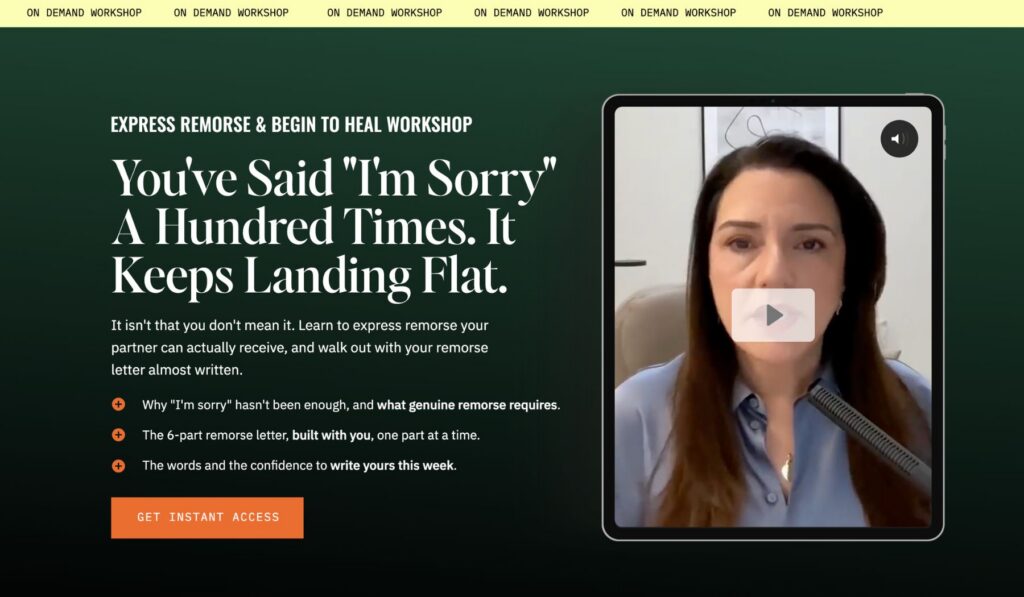
- Avoiding defensiveness, minimization, or gaslightingIn our program, we help unfaithful partners learn how to communicate remorse in ways their partner can actually feel. It’s a process, and many simply haven’t had guidance until now.
Can You Begin Healing After Betrayal Without Trust?
Absolutely. In fact, that’s often when healing needs to begin.
One of the biggest myths we hear is: “I can’t start healing because I don’t trust them.”
But trust isn’t a prerequisite for healing. It’s a result of healing.
We tell our clients: You don’t trust because you’re married or because time has passed you trust because someone has acted in trustworthy ways, repeatedly, over time.
That’s why we create roadmaps for rebuilding trust step by step, instead of asking hurt partners to just “have faith” and hope for the best.

What Are Some Ways to Navigate the Uncertainty?
You don’t have to decide everything right now. Here are a few strategies to help you begin healing while still holding space for not knowing.
1. Set a Short Term Healing Intention
Instead of pressuring yourself to stay after betrayal or leave, commit to 2–3 months of focused healing work. Use that time to observe, process, and explore, not to force a decision.
2. Find the Right Support
Not every therapist or coach specializes in infidelity recovery. Seek professionals trained in betrayal trauma, relational healing, and trust repair. This is sensitive work, and having the right guide makes a difference.
3. Build a Safe Support Circle
Choose one or two trusted people who can listen without judgment. Be careful about oversharing with those who might project their own pain or biases onto your situation.
4. Be Gentle With Yourself
You are doing the best you can in an incredibly painful situation. Give yourself the grace to move slowly, feel deeply, and heal at your own pace.
Final Thoughts: You Don’t Need Certainty to Begin Healing
If you’ve been holding off on starting the healing process because you’re not sure whether you want to stay, please hear this:
You are allowed to begin healing without having all the answers.
Healing is not a contract to stay. It’s a way to regain your footing, understand what’s possible, and make choices from a place of strength, not crisis.
Even if the relationship doesn’t continue, the clarity you gain from doing this work can be life-changing.
Ready to Take the Next Step?
If you’re in the aftermath of infidelity and don’t know where to start, our team is here for you. Our Infidelity Recovery Program is specifically designed for couples who are unsure, in crisis, or just beginning to explore healing.
👉 Learn more about the program and schedule a free 45-minute consultation with our program specialist at iditsharoni.com/45.
You don’t have to know your final answer right now.
You just have to take the first step.
Heading